
Introduction
At Roof Pros Plus, we believe your roof should do more than protect your home from the elements. It should perform. It should add measurable value. And today, it should generate power. As electricity rates continue to climb and many Ontario homeowners look for long-term solutions to control their energy bills, solar panels in Ontario have become one of the most strategic upgrades available.
Solar is no longer experimental. It is no longer reserved for early adopters. Residential solar has entered the mainstream because it delivers stability, long-term savings, and protection against rising electricity costs. The question is no longer whether solar works. The question is whether solar panels are worth it for your home, and that depends on several key factors.
Understanding the payback period is central to making an informed decision. A solar investment is not simply about environmental responsibility or reducing carbon emissions. It is about long-term financial performance, predictable electricity rates, and transforming your roof into a productive asset. The timeline for solar panels in Ontario to pay for themselves depends on system size, energy usage, solar panel cost, incentives, and electricity price trends. Let’s break that down step by step.
Step 1: Understand Your Current Electricity Costs
The starting point for calculating payback is simple: understand what you are currently spending on electricity. Many homeowners underestimate their true annual energy bills because they focus only on monthly fluctuations. We encourage homeowners to review a full 12 months of hydro statements to determine total electricity consumption and overall energy usage patterns.
Higher electricity usage typically results in a faster payback period. Why? Because the more electricity you consume, the more solar power you can offset. A home with substantial air conditioning demand in summer or electric heating in winter will have greater opportunity for savings compared to a household with minimal consumption.
Seasonal patterns are especially important in Ontario. Many homeowners see elevated electricity bills during summer cooling months and again in winter when heating systems, lighting, and appliances run more frequently. Solar panels in Ontario produce strong output in spring and summer, generating significant electricity that can offset these higher seasonal expenses through net metering credits.
Electricity rates are not static. As electricity prices continue to rise, the value of each kilowatt-hour generated by your solar system increases. That means today’s energy bills are not just an expense; they are a benchmark for measuring future savings.
Step 2: Determine How Much Solar Power Your Roof Can Produce
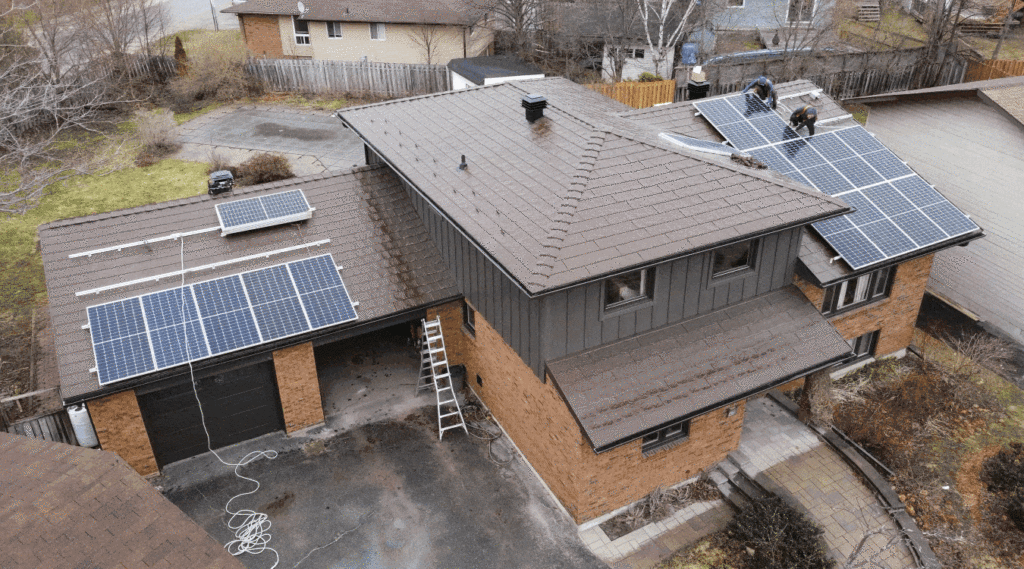
Your roof is the foundation of solar production. The amount of solar power your system can generate depends heavily on roof size, angle, orientation, and shading. South-facing roof slopes generally provide optimal exposure in Ontario, but east and west orientations can still deliver strong energy production.
Shading from trees, chimneys, or nearby structures reduces output and must be evaluated carefully. Usable roof space determines system size, and system size directly impacts both solar panel cost and long-term savings.
At Roof Pros Plus, we perform detailed site assessments to calculate projected electricity generated annually. Production modeling factors in local climate data, panel efficiency, and roof characteristics. System production drives financial return. The more electricity your panels generate, the more your energy bills decrease.
Cold weather does not eliminate production. Solar technology performs efficiently in lower temperatures as long as sunlight is available. Snow typically slides off properly angled panels, and winter sunlight still contributes to annual energy production totals.
The goal is to design a system that maximizes solar production without exceeding practical financial thresholds. A properly sized system ensures optimal balance between installation cost and return.
Step 3: Calculate System Cost vs. Annual Savings
Understanding solar panel cost relative to annual savings is where payback becomes tangible. The upfront cost and initial investment vary depending on system size, equipment quality, and installation complexity. Larger systems cost more, but they also offset more electricity.
There is a direct relationship between system size and bill offset. A partial offset system may reduce 50–70 percent of annual electricity consumption. A near-total offset system aims to cover nearly all annual energy usage through solar energy production.
Partial systems generally require lower upfront investment but deliver smaller annual savings. Near-total offset systems cost more initially but often accelerate the payback period because they eliminate a larger portion of electricity bills.
Residential solar economics improve when electricity rates increase. Each year that electricity prices rise, the financial return from your system strengthens. Over time, cumulative savings surpass the original installation cost, marking the completion of the payback period.
Step 4: Account for Net Metering and Utility Credits
Net metering is one of the most important financial mechanisms supporting solar panels in Ontario. Through Ontario’s net metering program, homeowners remain connected to the grid while generating their own electricity. When your solar system produces excess energy during peak sunlight hours, that electricity is sent back to the grid. In exchange, you earn credits. These credits are applied to future energy bills when your system produces less electricity, such as during winter months or cloudy periods.
This seasonal balancing is critical in Ontario’s climate. Summer solar production often exceeds household demand, creating surplus credits. In winter, when daylight hours are shorter, those credits offset consumption. Net metering ensures that excess energy retains full financial value. Ontario’s net metering program improves overall system performance and shortens the effective payback period. Instead of losing surplus production, homeowners capture long-term value from every kilowatt-hour generated.
Step 5: Consider Ontario Electricity Rate Trends
Electricity rates are a major variable in payback calculations. Rising hydro rates directly improve solar ROI. When electricity prices increase, the value of solar energy increases alongside them. Locking in energy costs matters for long-term budgeting. Solar allows homeowners to stabilize a significant portion of their electricity expenses for decades. Rather than absorbing future electricity rate increases, you produce your own power.
Inflation protection is another advantage. As overall living costs rise, solar systems continue generating electricity at a fixed production cost once installed. This accelerates effective payback over time because savings compound against increasing grid prices. Many Ontario homeowners see solar not just as savings, but as financial stability against unpredictable electricity rates.
Step 6: Compare Short-Term Cost vs Long-Term Value
The upfront investment can feel substantial. However, evaluating solar purely as an expense overlooks its asset value. Residential solar transitions from cost to income-generating infrastructure once installed. Financing options can reduce initial barriers. In some cases, interest free loans and government incentives such as the Greener Homes Grant help offset the upfront cost. The federal government has supported solar incentives that improve accessibility for homeowners planning long-term upgrades.
Monthly financing payments are often comparable to or lower than existing energy bills. As savings accumulate, the system effectively pays for itself. Once the payback period ends, decades of low-cost electricity follow. Solar becomes a long-term asset attached to your roof, increasing property value and lowering operating expenses.

Step 7: Estimate Your Personal Payback Range
1In Ontario, typical residential solar payback ranges often fall between 8 and 15 years, depending on electricity rates, system size, installation cost, and available incentives. Some homeowners with high energy usage and strong roof orientation may see shorter payback timelines. Every building falls somewhere within a performance spectrum. Roof angle, shading, structural integrity, and consumption patterns all influence results. That is why professional modeling is essential.
Step 8: What Happens After the System Pays for Itself
Once the system reaches payback, the economics shift dramatically. Solar panels continue producing electricity for decades. Most modern panels carry warranties of 25 years or more, with expected operational lifespans extending beyond that. After the initial investment is recovered, ongoing electricity generated translates into pure savings. Electricity bills are reduced to minimal connection charges and occasional seasonal variability.
Increased property value becomes another benefit. Homes equipped with solar panels installed often attract buyers seeking lower operating costs and clean energy solutions. Reduced carbon emissions and independence from fossil fuels enhance market appeal. Solar becomes part of the structural identity of the home, delivering consistent energy production and long-term financial return.
Conclusion
Solar panels in Ontario are not just about cutting electricity bills. They represent financial stability, predictable electricity rates, and long-term control over energy usage. The payback period varies depending on system size, solar panel cost, incentives, and electricity price trends, but the underlying principle remains consistent: solar converts rising energy expenses into long-term savings.
Through net metering, homeowners remain connected to the grid while earning credits for excess energy. Rising electricity rates strengthen ROI over time. Government incentives reduce upfront cost. And once payback is achieved, decades of low-cost solar power follow. At Roof Pros Plus, we approach residential solar as an integrated roofing solution. Your roof protects your home. With the right system, it can also power it. If you are considering solar panels in Ontario, the next step is a professional site assessment. We will evaluate your roof, calculate system size, estimate energy production, and provide clear financial projections tailored to your property. Solar is not just about savings. It is about stability, performance, and turning your roof into a long-term asset.
